Share your full plan
List every procedure and date in your Korea trip so the doctor can see the whole picture.
Bouncing back takes longer when you are short on fluids, food and sleep. Here is how a recovery drip may support you after an aesthetic procedure, a hard workout or a minor illness — and where its limits are.
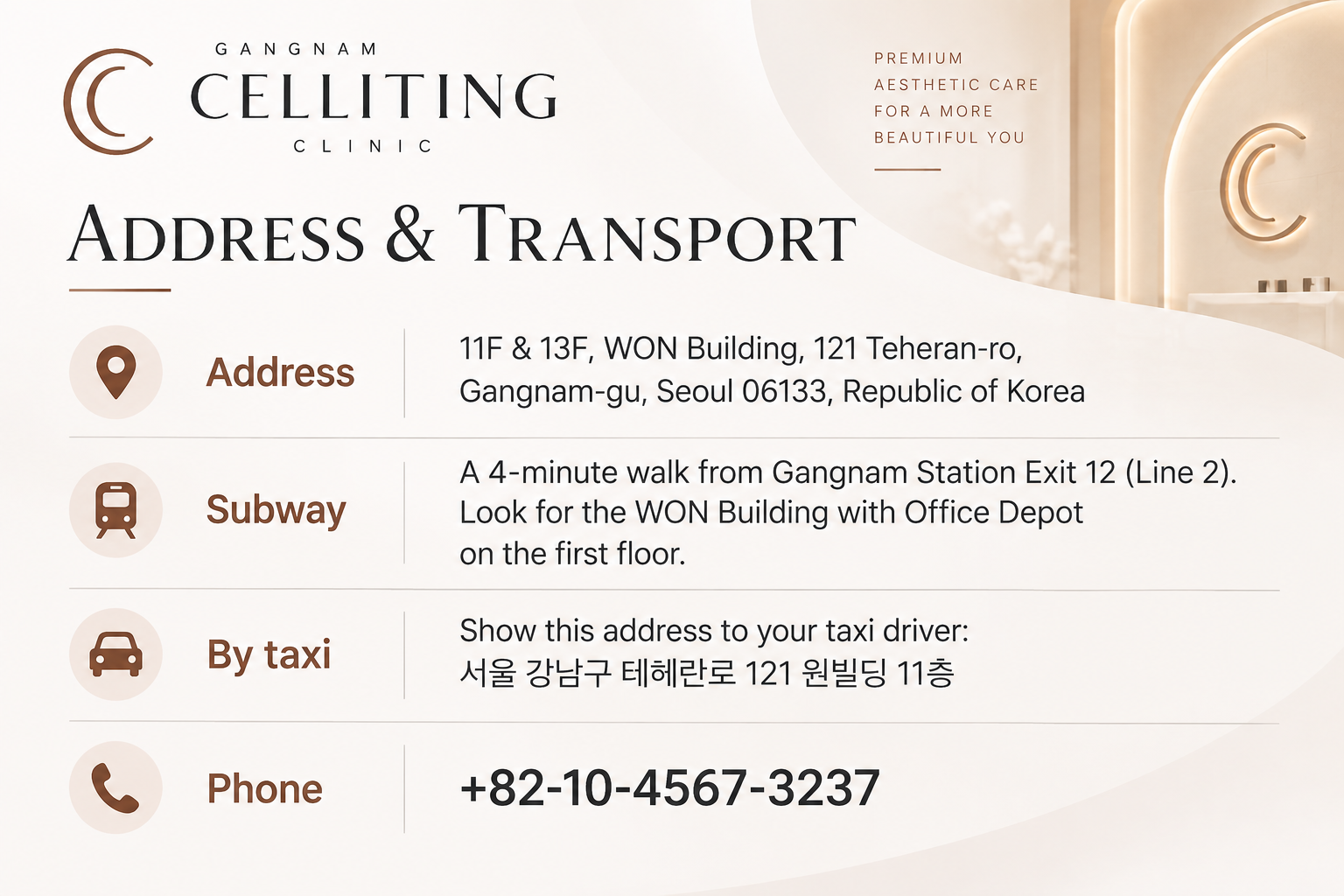
Gangnam Celliting Clinic · 121 Teheran-ro, Gangnam-gu, Seoul · Gangnam Station Exit 12 (4-min walk)
Recovery IV therapy combines fluids with selected vitamins or antioxidants to support you when you feel depleted after a procedure, intense exercise or a short illness. It can ease dehydration-related tiredness, but it does not heal tissue faster or replace rest. At Gangnam Celliting Clinic in Gangnam, Seoul, the doctor times the drip around your other treatments and adjusts it to your condition.
A recovery drip can support three common situations, each with a different focus. The clinic lists hydration and fatigue-recovery drips among its options, and the doctor tailors the contents to the reason you are tired.
Fasting before sedation, a long treatment day and travel can leave you drained. Fluids and vitamins may help you feel steadier while the treated skin settles on its own timeline.
Long hikes, races or intense gym sessions lose water and salts through sweat. A drip is rarely needed, but may help if you cannot rehydrate by drinking.
A cold or stomach bug can cut appetite and fluid intake for days. Once the acute illness has passed, a drip may help you get back on your feet.
The doctor decides the timing, but a recovery drip is usually planned for the same day after a procedure or for the following day, never in a way that interferes with the treatment itself.
| Your treatment | Common timing for the drip | Why |
|---|---|---|
| Energy-based lifting | Same day afterwards, or next day | No conflict with the treated skin |
| Injectables or boosters | After treatment, arm away from face | Keeps the treatment plan simple |
| Procedure under sedation | As advised by the doctor | Fasting and monitoring come first |
| Several treatments in one trip | Between treatment days | Helps on a busy schedule |
If you are combining several lifting devices, such as Ultherapy PRIME or Thermage FLX, the doctor can suggest where a recovery drip fits in your schedule.
| It may | It cannot |
|---|---|
| Correct mild dehydration | Make swelling or bruising disappear faster |
| Ease tiredness linked to low fluid intake | Replace sleep, food or rest days |
| Provide vitamins if your intake has been poor | Treat an infection or serious illness |
| Help you feel steadier on a busy day | Guarantee a quicker aesthetic result |
Swelling, redness and bruising after aesthetic procedures follow their own course. Cool compresses, sleep and the aftercare you receive in writing matter more than any drip.
Suitability is a medical decision made by your doctor after an in-person consultation and review of your health history.
List every procedure and date in your Korea trip so the doctor can see the whole picture.
The doctor suggests when the drip fits best — after a procedure, between treatment days or after illness.
Your current condition, medicines and any symptoms are reviewed before the formulation is chosen.
You rest while the drip runs and staff check on you; the clinic confirms the timing when you book.
Keep to the written aftercare for your procedure; the drip adds to it but does not change it.
No serious complication since 2007. FDA/KFDA-cleared devices and verifiable, genuine consumables.
Dr. Ho-chan Kim and Dr. Young-mi Rhee personally consult and treat. Nothing is handed off.
Named an Advanced Regenerative Medicine Institution by the Ministry of Health and Welfare in June 2026.
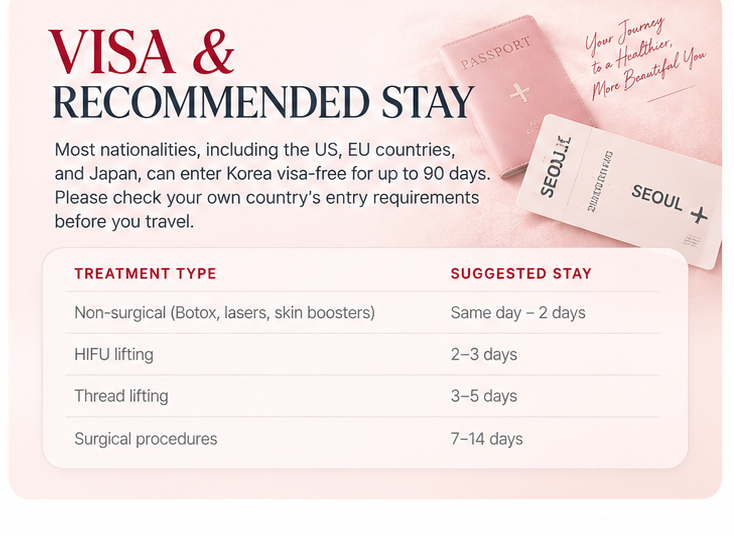
Visitors who stack several procedures into a short stay in Korea often underestimate how tiring the days become. Leave at least one quiet half-day, sleep well, and treat a recovery drip as optional support. Written aftercare is provided in your language, and international patients have a free 3-month follow-up after returning home, plus a 24-hour contact line if something worries you during or after the trip.
Reviewed by Dr. Ho-chan Kim, MD, PhD · Updated October 2026
There is no good evidence that an IV reduces post-procedure swelling or bruising. It may help you feel less drained, which is useful on a busy treatment day, but the skin settles on its own schedule. Follow the cooling and sleep advice in your aftercare.
Often yes, but it depends on the procedure, any sedation used and your health. The doctor checks timing case by case. Never arrange a drip elsewhere on a treatment day without telling the doctor who is treating you.
No. For routine training, drinking fluids, eating carbohydrate and protein, and sleeping are the proven basics. A drip may be considered after an unusually hard event when you cannot rehydrate by mouth. Competitive athletes should also check their sport's anti-doping rules on IV infusions.
Usually, once the acute symptoms have settled. Tell the doctor how long you were unwell and whether you still have fever, vomiting or diarrhoea. If symptoms are ongoing or severe, a medical assessment comes before any wellness drip.
It normally does not, because fluids and vitamins are given into an arm vein away from the treated area. The doctor still reviews the ingredients against your procedure plan and medicines so that nothing clashes.
Share your treatment dates via WhatsApp or the consultation form. The doctor will suggest whether, and when, a recovery drip fits your plan.
Medical information on this page is provided by Gangnam Celliting Clinic and reviewed by our medical directors. It is not a substitute for an in-person medical consultation. Individual results vary, and all procedures carry potential risks and side effects that your doctor will explain before treatment.
From skin lifting and stem cell treatments to regenerative skin care, our two MD-PhD directors plan every treatment personally. Send us your questions and travel dates.
Everything you need to plan a treatment trip to Seoul



How to find us
WhatsApp :
+82-10-4567-3237
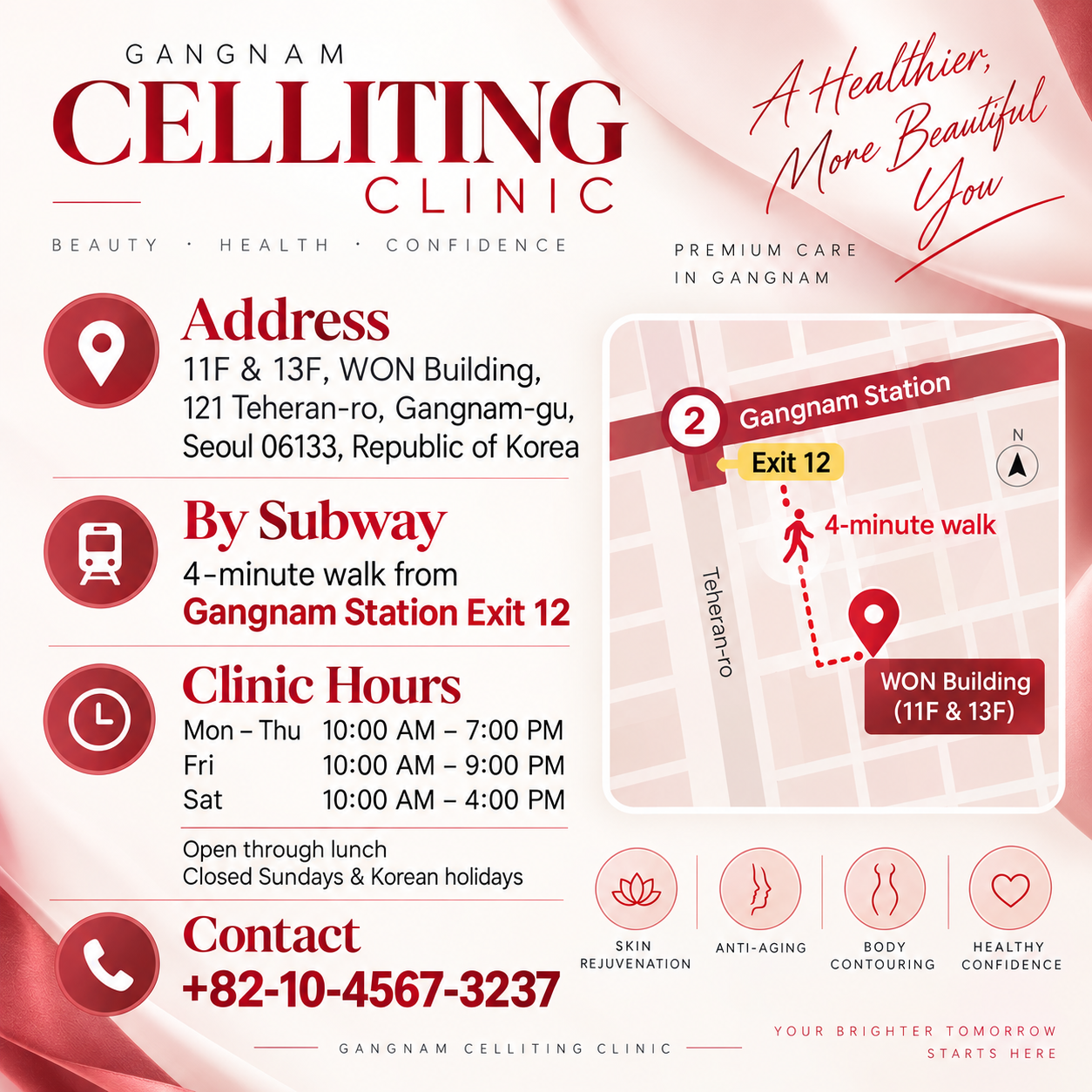
Address : 11F & 13F, WON Building, 121
Teheran-ro, Gangnam-gu, Seoul 06133, Republic of Korea
Gangnam Station, Exit 12