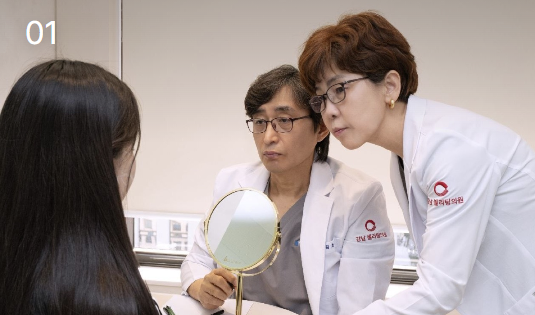
Doctor consultation
Your goals, health history and medicines are reviewed, and the doctor explains what the evidence can and cannot promise.
A plain-English look at the science: how your own cells and growth factors send repair signals, how blood, fat and donor sources differ, and where the research is strong or still thin.
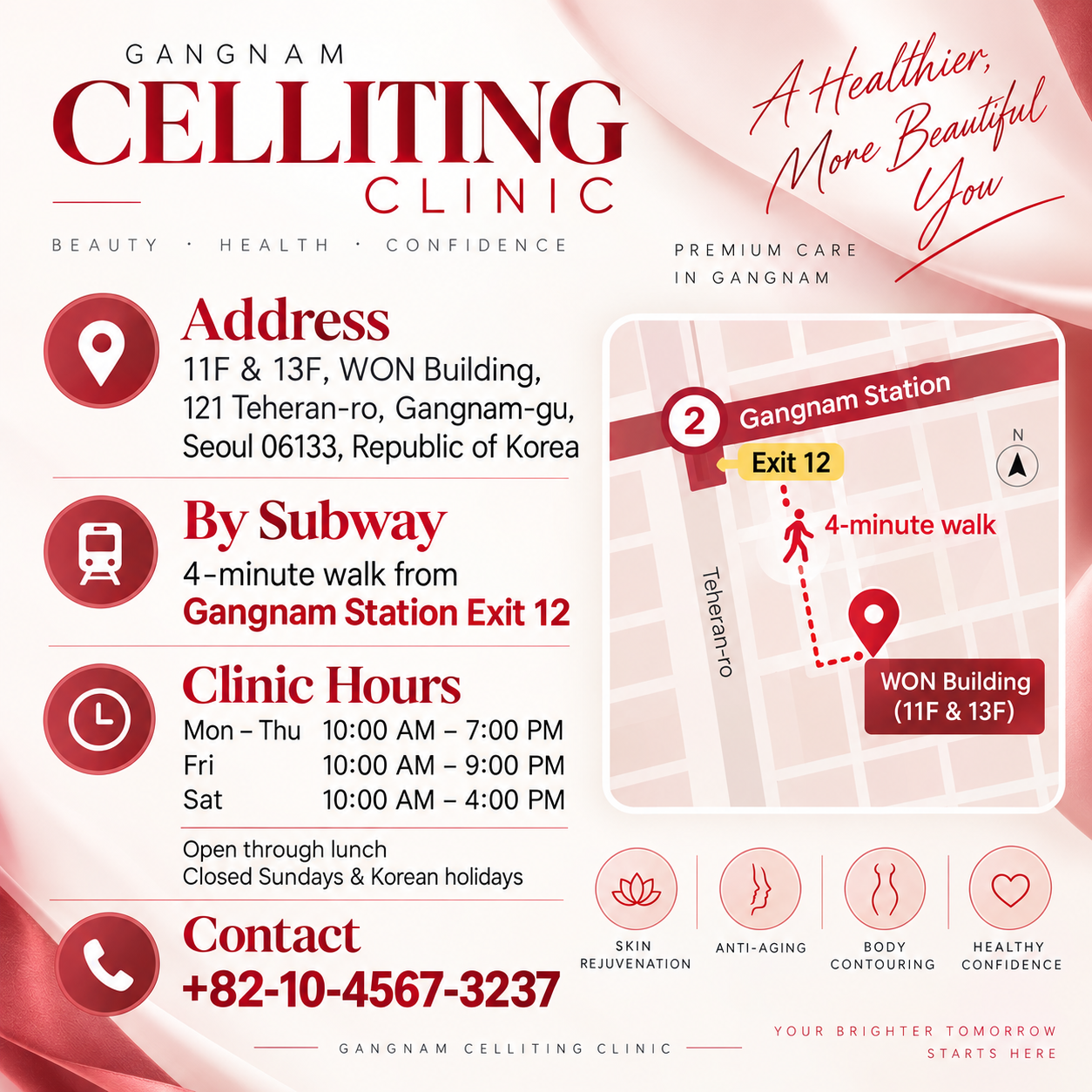
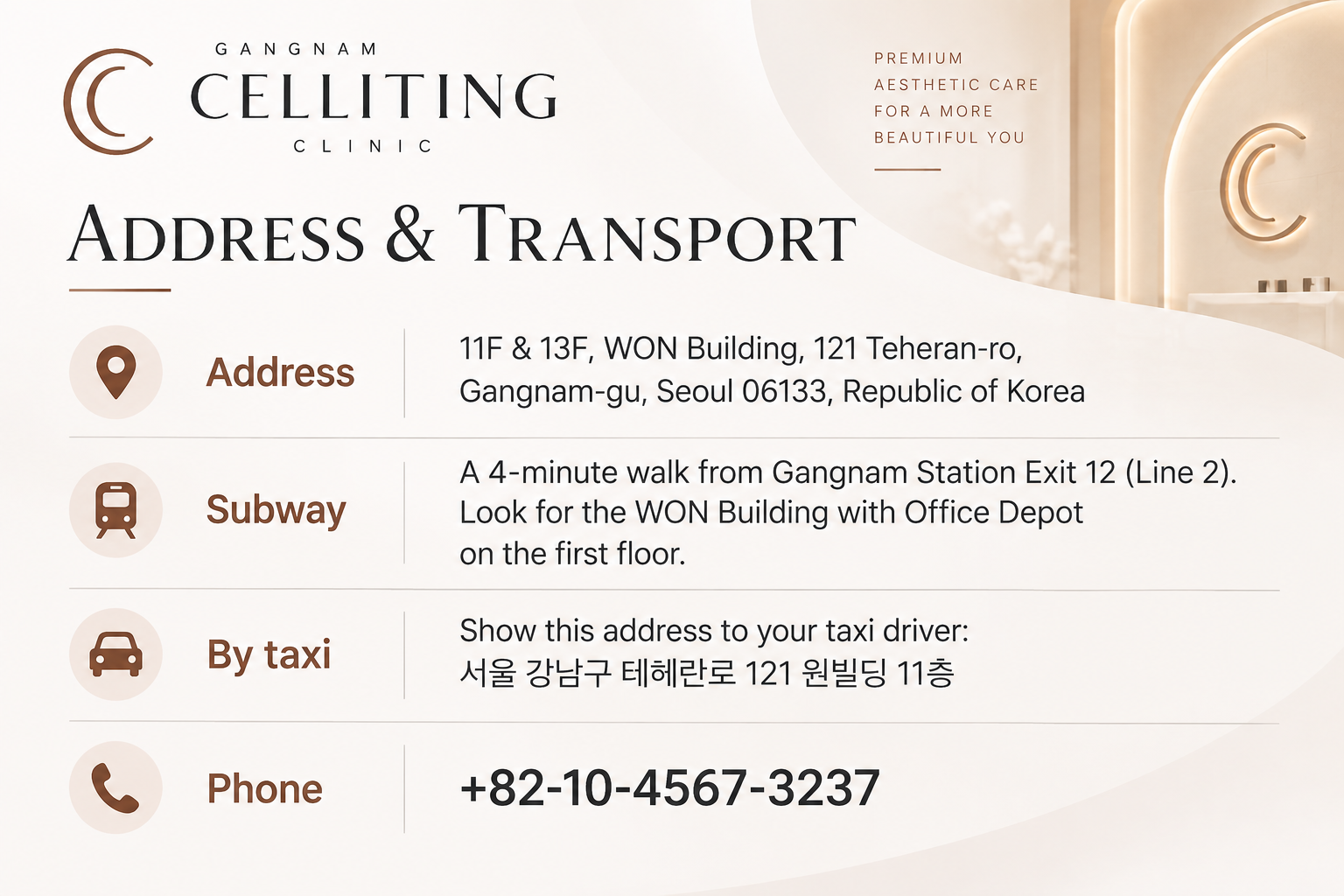
Gangnam Celliting Clinic · 121 Teheran-ro, Gangnam-gu, Seoul · Gangnam Station Exit 12 (4-min walk)
Stem cell regenerative medicine uses cells and the signalling proteins they release to support the body's own repair processes. In skin care, most of the effect is thought to come from these signals, not from new cells replacing old ones. At Gangnam Celliting Clinic in Gangnam, Seoul, programs use your own blood-derived cells, with no donor material or fat extraction, after a doctor's assessment.
Stem and progenitor cells mainly help tissue by releasing messages, not by turning into new skin. Scientists call this the paracrine effect: the cells release growth factors, cytokines and tiny vesicles (exosomes) that tell nearby cells what to do.
Think of it as a repair crew foreman rather than a bricklayer. The signals may encourage fibroblasts to make collagen, help small blood vessels form and calm excess inflammation. Your own tissue does the rebuilding work.
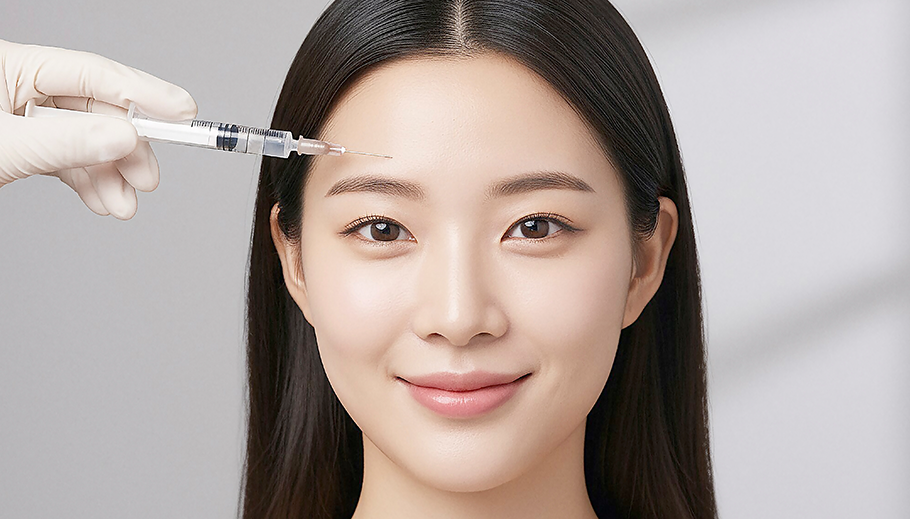
Regenerative treatments differ mainly in where the cells come from, and this affects the procedure, the risks and the rules that apply.
| Autologous blood-derived | Adipose (fat)-derived | Donor-derived | |
|---|---|---|---|
| Where from | Your own blood | Your own fat | Another person or cell line |
| How collected | Blood draw | Liposuction-type harvest | Prepared off-site |
| Immune match | Your own cells | Your own cells | Not your own |
| Extra procedure | None beyond blood draw | Fat extraction needed | None for patient |
| Offered here | Yes (Miracell, NovaStem) | No | No |
Gangnam Celliting Clinic uses only autologous, blood-derived preparation. There is no donor material and no fat extraction, and cells are prepared in four sterile rooms. Read more about the clinic's overall stem cell treatment programs.
Research supports the idea that growth factors and cell signals play a real role in wound healing and tissue repair. Laboratory and early clinical studies on skin also suggest possible gains in texture, hydration and firmness for some people.
Growth factors take part in normal healing, and autologous blood products have a long record of use in medicine.
Cosmetic skin results from cell-based concentrates come from smaller studies with varied methods.
Claims that stem cells reverse ageing, cure disease or give permanent results are not supported.
Results also depend on the preparation method, the person's age and health, and how the product is delivered. That is why a consultation with a doctor, not a brochure, should decide whether it suits you. For related science on cell-free signals, see exosome therapy.
It means the clinic has been reviewed and designated by Korea's Ministry of Health and Welfare as an Advanced Regenerative Medicine Institution, granted on June 15, 2026. Korea regulates regenerative medicine under specific rules, so this designation is a useful point to check when choosing a provider.
Suitability is a medical decision made by your doctor after an in-person consultation and review of your health history.
Your goals, health history and medicines are reviewed, and the doctor explains what the evidence can and cannot promise.
A blood sample is taken in clinic, similar to a routine test.
Cells and growth factors are concentrated in a dedicated sterile room using Miracell or NovaStem.
The concentrate is applied to the agreed area with comfort management matched to the procedure.
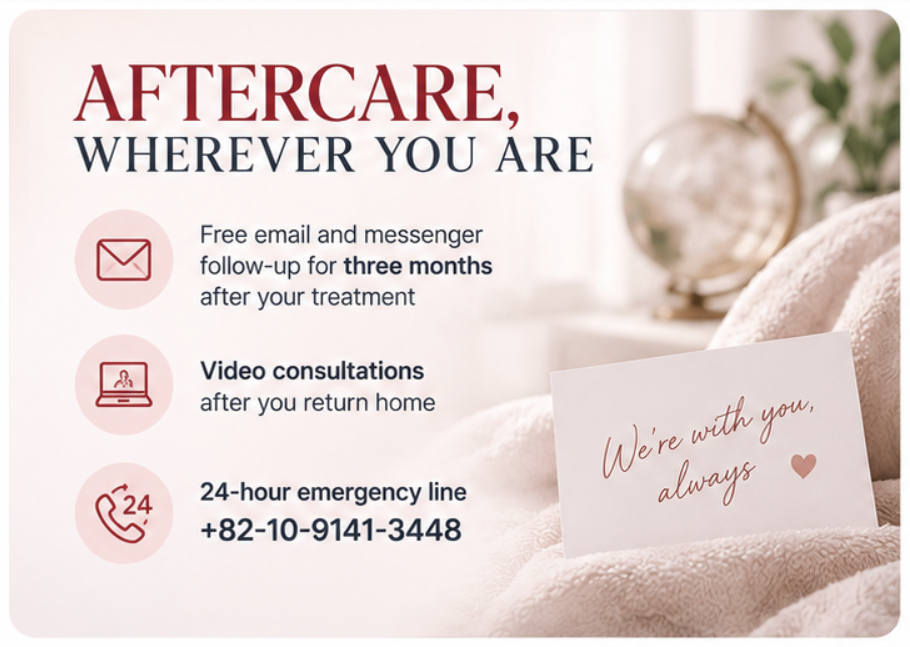
You receive written aftercare in your language and a free 3-month follow-up after you return home.
Written aftercare in your language, a 24-hour line and a free 3-month follow-up.
No serious complication since 2007. FDA/KFDA-cleared devices and verifiable, genuine consumables.
Monitored sleep sedation, AirNox analgesia, the X-injector or local anesthesia, matched to the procedure.
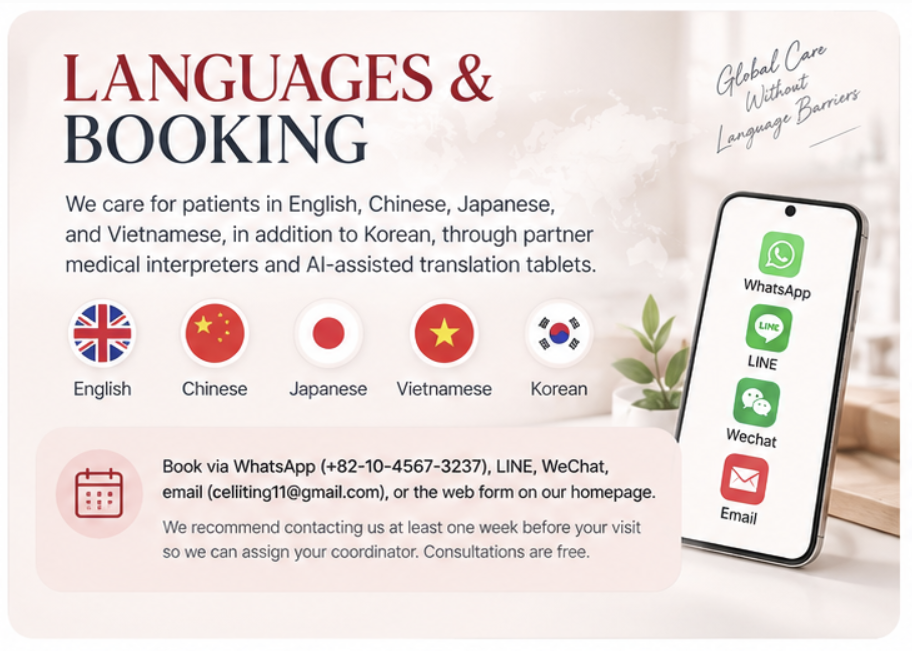
Many visitors plan the consultation and treatment for the same visit, then keep a day or two free in Seoul in case of mild redness or swelling. The clinic is about a 4-minute walk from Gangnam Station Exit 12. Staff support English, Chinese, Japanese and Vietnamese, and you keep a 24-hour contact line after leaving. Send your medical history in advance through WhatsApp +82-10-4567-3237 so the doctor can check suitability before you book flights.
Reviewed by Dr. Ho-chan Kim, MD, PhD · Updated October 2026
Mostly no. Current science suggests the main benefit comes from signals the cells release, such as growth factors, which encourage your existing skin cells to repair and make collagen. The cells act more like messengers than building material, which is why changes appear gradually.
Blood collection is a simple draw, so no fat-harvesting procedure is needed. Using your own blood also means no donor material. The clinic's Miracell and NovaStem systems are designed for minimally manipulated, autologous preparation, which keeps the process simpler for patients on a short trip.
Partly. The role of growth factors in healing is well established, but studies on cosmetic skin results are still relatively small and varied. Some people notice better texture or firmness, others notice little. Your doctor should explain this uncertainty honestly before you decide.
Yes, though using your own cells avoids donor-related immune issues. Possible effects include bruising at the blood-draw site, temporary redness, swelling or tenderness where it is applied, and, rarely, infection. The clinic reports no serious complication since 2007, but every procedure carries some risk.
It means Korea's Ministry of Health and Welfare designated Gangnam Celliting Clinic as an Advanced Regenerative Medicine Institution on June 15, 2026. For patients, it is an independent indicator that the clinic operates within Korea's regulatory framework for regenerative care.
Send your questions and medical history through WhatsApp or the consultation form. Dr. Kim or Dr. Rhee will explain whether regenerative care makes sense for you.
Medical information on this page is provided by Gangnam Celliting Clinic and reviewed by our medical directors. It is not a substitute for an in-person medical consultation. Individual results vary, and all procedures carry potential risks and side effects that your doctor will explain before treatment.
From skin lifting and stem cell treatments to regenerative skin care, our two MD-PhD directors plan every treatment personally. Send us your questions and travel dates.
Everything you need to plan a treatment trip to Seoul

How to find us
WhatsApp :
+82-10-4567-3237
Address : 11F & 13F, WON Building, 121
Teheran-ro, Gangnam-gu, Seoul 06133, Republic of Korea
Gangnam Station, Exit 12