Three photos
Send front, side and 45-degree photos with a relaxed face through WhatsApp.
Sagging is not only loose skin. Ligaments stretch, fat pads slide, the SMAS layer weakens and facial bone slowly changes. Understanding which layer is involved, and how far it has gone, explains why treatment differs from person to person.

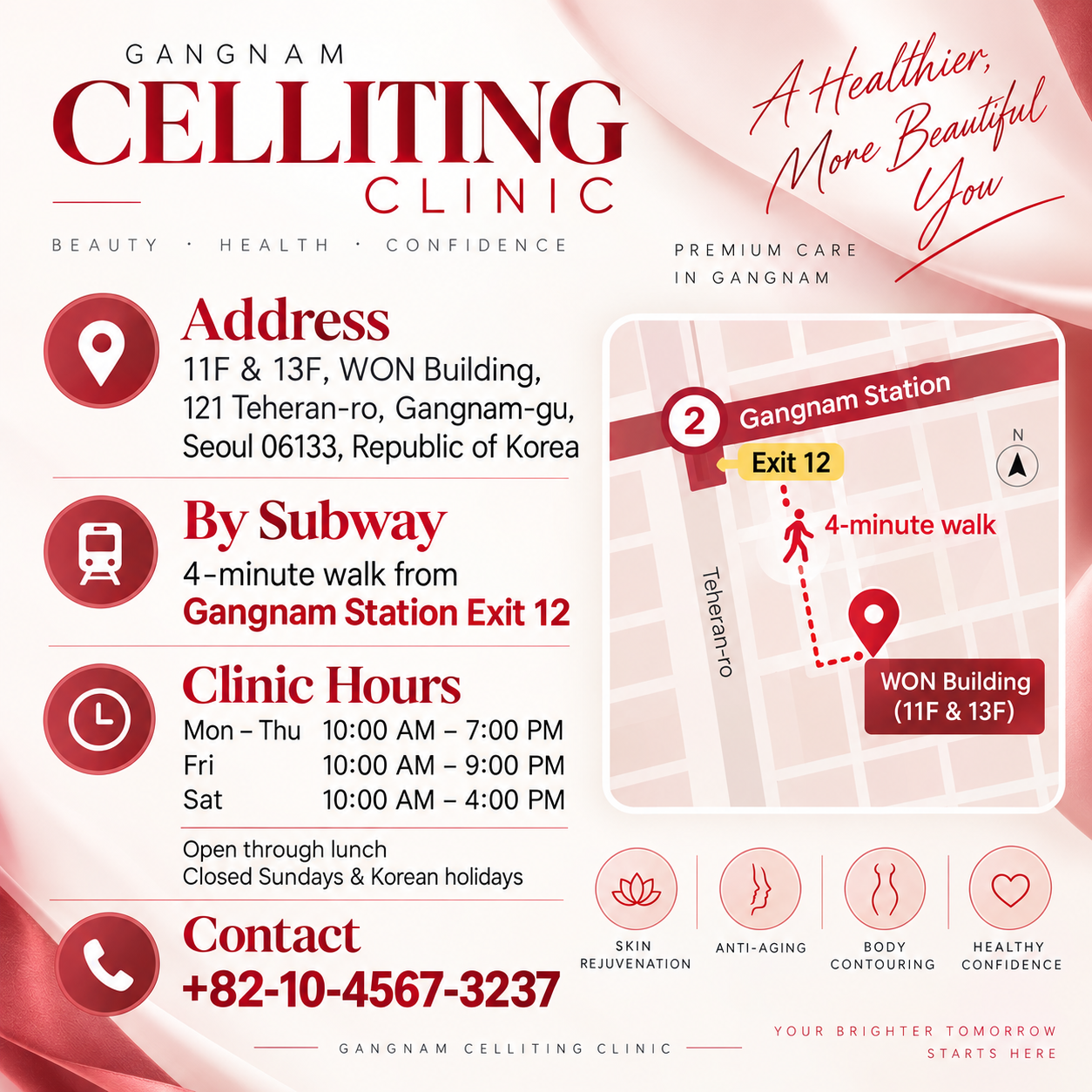
Gangnam Celliting Clinic · 121 Teheran-ro, Gangnam-gu, Seoul · Gangnam Station Exit 12 (4-min walk)
The face sags because several layers change together: skin loses collagen, the SMAS support layer and retaining ligaments loosen, fat pads shrink or descend, and facial bone gradually resorbs. Treatment therefore depends on the stage. Early sagging may respond to device lifting alone, moderate sagging often needs combined approaches, and advanced sagging may need a surgical opinion.
The face sags because every layer, from the surface down to the bone, changes slowly with age. Looking at each one explains why sagging rarely has a single fix.
Collagen and elastin decline, so the skin stretches more easily and recoils less. Sun exposure speeds this up.
The face has separate fat compartments. With age some shrink and others slide downward, leaving hollows above and heaviness below.
The SMAS is a thin fibrous-muscle layer that supports the face, held in place by retaining ligaments. When these loosen, tissue drifts toward the jaw.
Facial bones gradually lose volume, especially around the eye sockets and jaw, so the soft tissue above has less to rest on.
Genetics, significant weight changes and smoking can also influence how early and how strongly these changes appear.
Sagging tends to progress through three broad stages. Stand in good front light, look straight ahead with a relaxed face, and compare yourself with the descriptions below.
| Stage | What you may see | Simple self-check |
|---|---|---|
| Early | Slightly softer jawline, mild smile lines | Lie back: face looks clearly firmer |
| Moderate | Early jowls, deeper folds, flatter cheeks | Gently lift cheeks with fingers: jaw sharpens clearly |
| Advanced | Heavy jowls, loose skin under chin and neck | Lift with fingers: lots of excess skin gathers |
The right approach depends on the stage and on which layer is mainly responsible. A typical way doctors match them is:
For a ranked overview of options, see best treatments for facial sagging, or read how devices compare with surgery on our non-surgical face lifting page.

Suitability is a medical decision made by your doctor after an in-person consultation and review of your health history.
Send front, side and 45-degree photos with a relaxed face through WhatsApp.
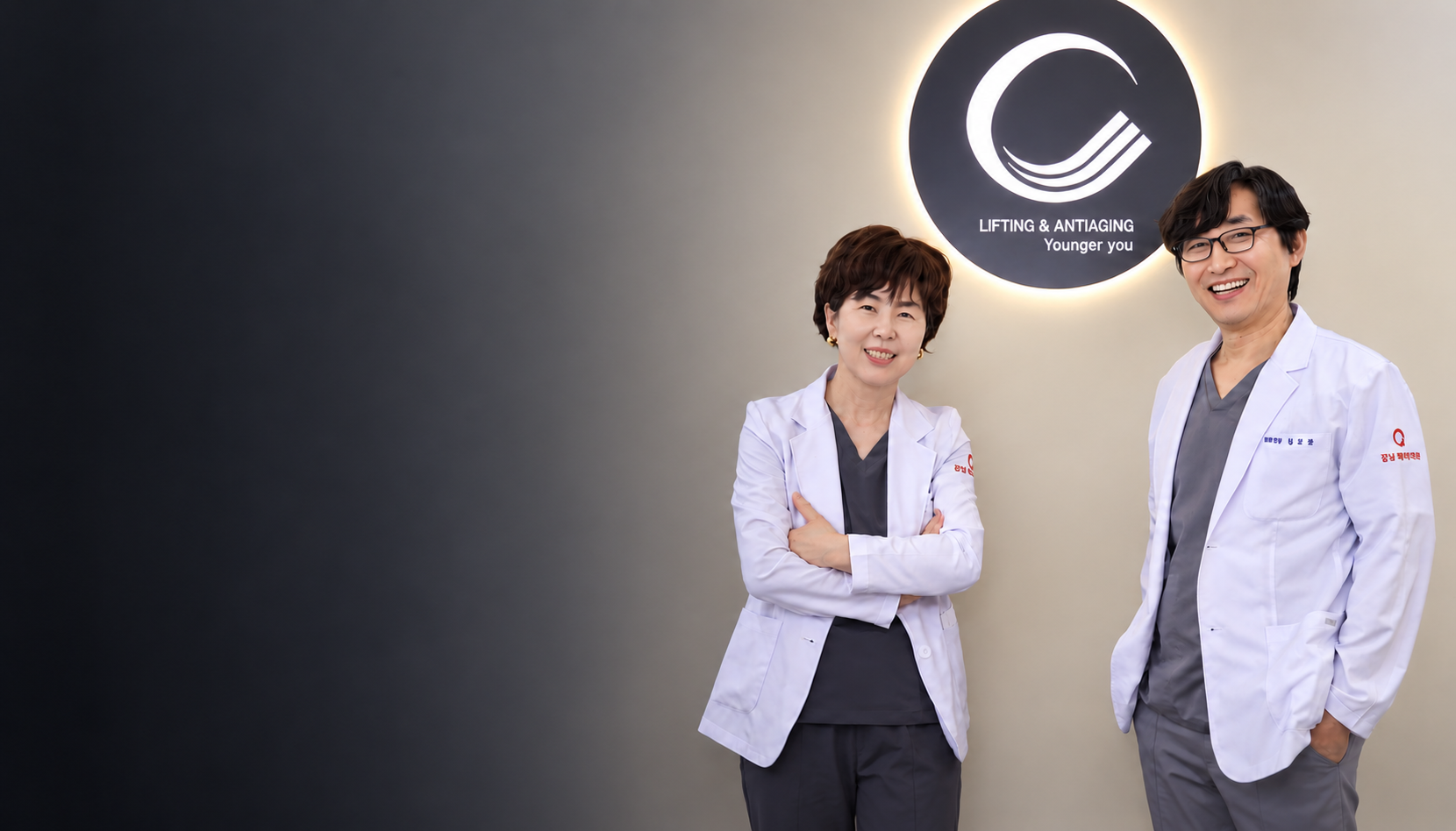
Dr. Ho-chan Kim or Dr. Young-mi Rhee assesses skin, fat, SMAS support and bone structure, drawing on their anatomy and physiology research backgrounds.
The doctor explains your stage and which layers the plan will target first.
Lifting devices and, where suitable, volume-supporting treatment are performed in planned order.
Send follow-up photos from home so the doctor can review how the tissue has responded.
Monitored sleep sedation, AirNox analgesia, the X-injector or local anesthesia, matched to the procedure.
Named an Advanced Regenerative Medicine Institution by the Ministry of Health and Welfare in June 2026.
Written aftercare in your language, a 24-hour line and a free 3-month follow-up.
For early and moderate stages, device-based lifting usually needs only a short stay in Gangnam, Seoul, as downtime is minimal. If volume treatment such as Sculptra is added, the doctor may suggest returning for further sessions, which is worth considering when you plan future trips to Korea. The clinic is about a four-minute walk from Gangnam Station Exit 12 and offers care in English, Chinese, Japanese and Vietnamese, with a free three-month follow-up.
Reviewed by Dr. Ho-chan Kim, MD, PhD · Updated October 2026
Many people notice early signs in their mid-thirties to forties, but timing varies widely. Genetics, sun exposure, weight changes and bone structure all play a role. Some people with strong cheekbones and thick skin show sagging later than others.
It can. Significant weight loss reduces facial fat that was supporting the skin, which may make loose skin and jowls more visible. If your weight is still changing, the doctor may suggest waiting until it stabilises before planning lifting.
Usually both. Skin loses elasticity, but the SMAS layer, ligaments, fat pads and bone also change. That is why the doctor examines each layer instead of only looking at the skin surface.
There is limited evidence that facial exercises prevent sagging. They may strengthen certain muscles, but they do not restore collagen, ligament support or lost bone volume. Sun protection, stable weight and not smoking are better-supported habits.
If gently lifting your cheeks gathers a lot of loose skin along the jaw and neck, devices may not give the change you hope for. The doctor will examine you and explain honestly when a surgical opinion would serve you better.
Send three relaxed-face photos through WhatsApp or the consultation form, and our doctors will tell you which stage you are at and what may help.
Medical information on this page is provided by Gangnam Celliting Clinic and reviewed by our medical directors. It is not a substitute for an in-person medical consultation. Individual results vary, and all procedures carry potential risks and side effects that your doctor will explain before treatment.
From skin lifting and stem cell treatments to regenerative skin care, our two MD-PhD directors plan every treatment personally. Send us your questions and travel dates.
Everything you need to plan a treatment trip to Seoul




How to find us
WhatsApp :
+82-10-4567-3237
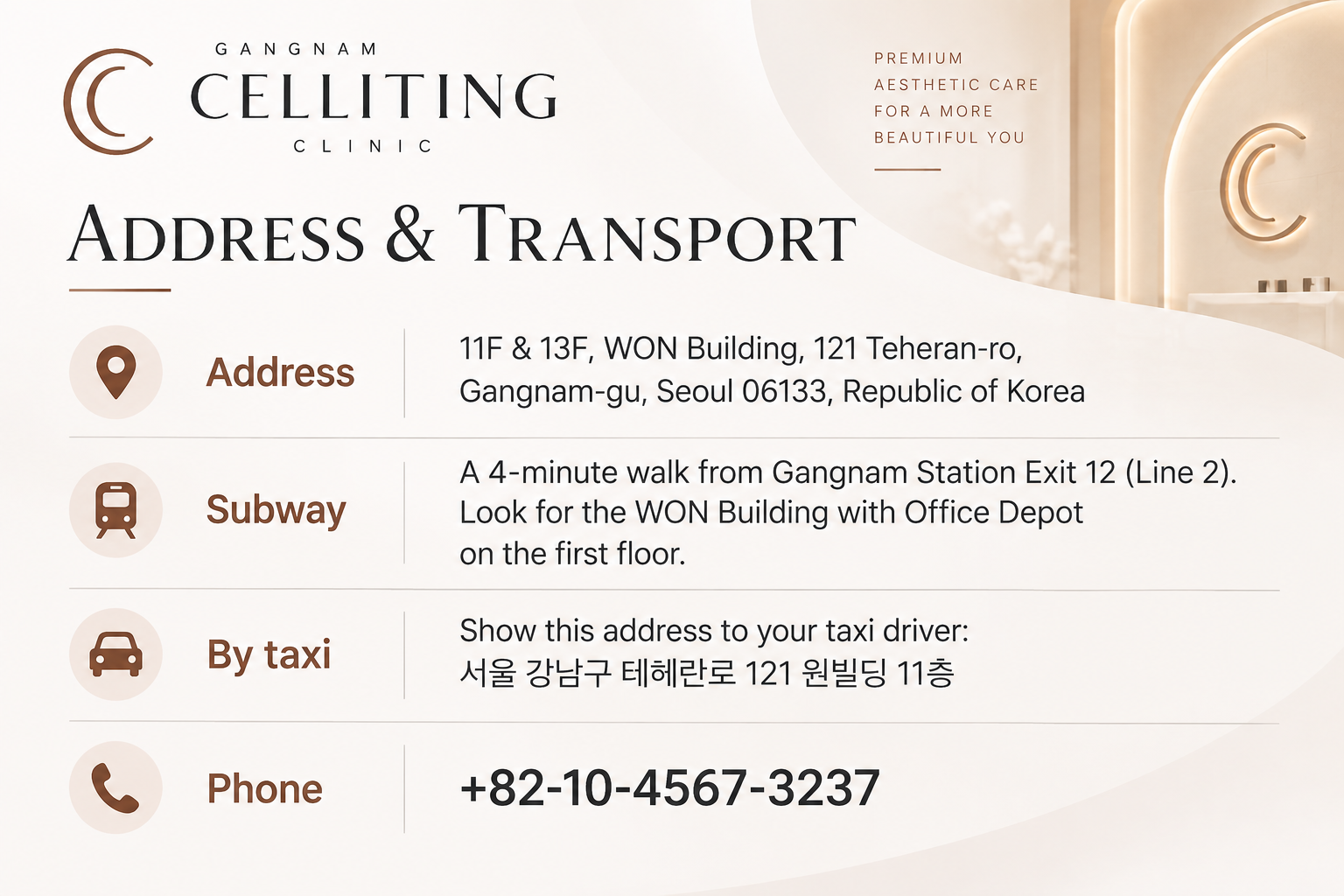
Address : 11F & 13F, WON Building, 121
Teheran-ro, Gangnam-gu, Seoul 06133, Republic of Korea
Gangnam Station, Exit 12