Plan the main treatment
The doctor confirms the device or skin treatment and your recovery window.
Skin that has just had laser or energy treatment, or skin that reddens easily, needs calm before anything else. Here is how exosomes may support recovery, what research does and does not show, and how to plan one trip.

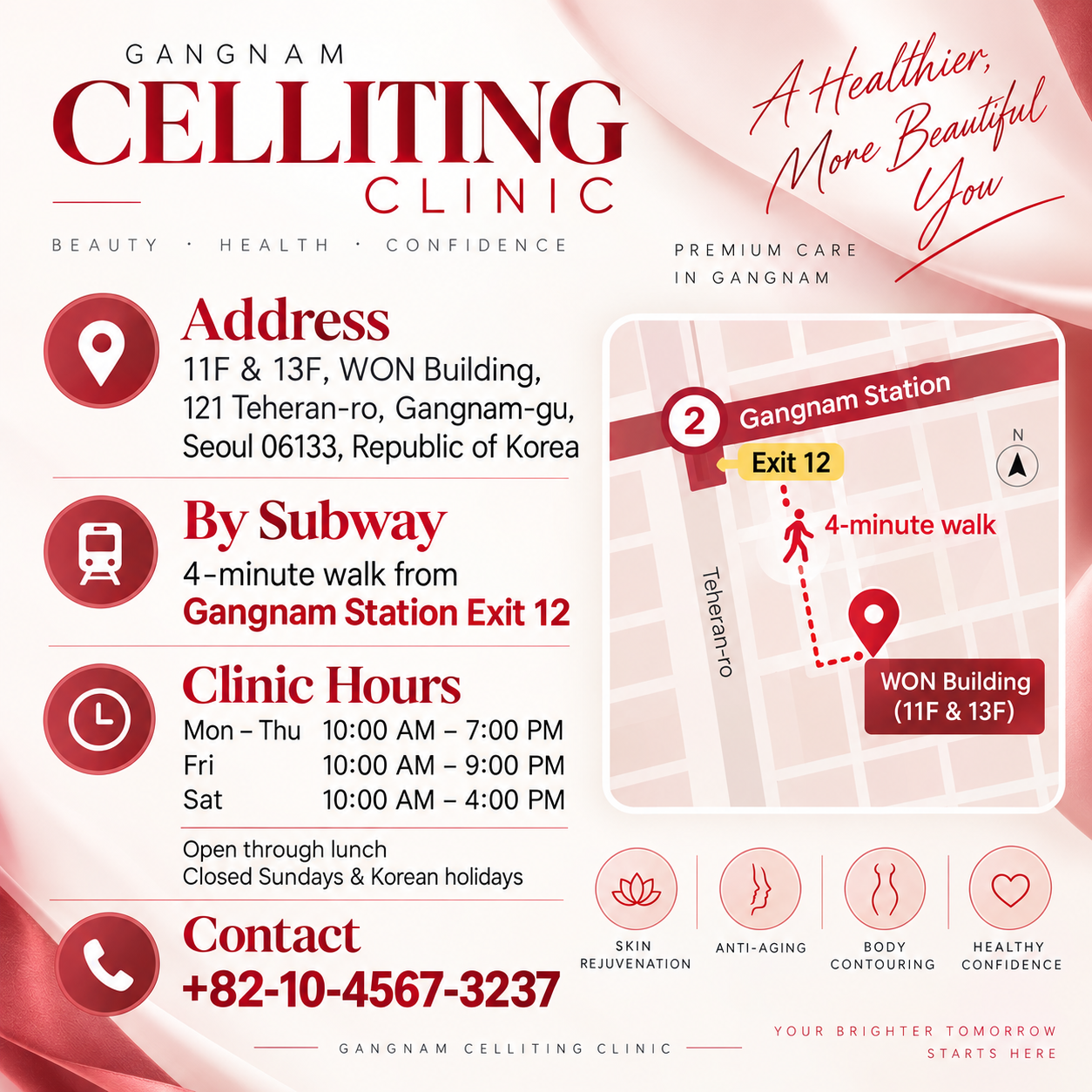
Gangnam Celliting Clinic · 121 Teheran-ro, Gangnam-gu, Seoul · Gangnam Station Exit 12 (4-min walk)
Exosomes may be used after laser or energy-based treatments, and for some sensitive or redness-prone skin, to support the skin's recovery and barrier. Early research is encouraging, but large, long-term human studies are still limited, so benefits are not proven for every use. At Gangnam Celliting Clinic, the doctor decides whether and when exosome support fits your procedure.
They may. Laser, radiofrequency and ultrasound treatments create controlled heat or injury so the skin rebuilds, and the first days afterwards can bring redness, dryness and sensitivity. Exosome application is sometimes added at this stage to support the skin's own repair processes.
| After | Typical short-term effect | Possible role of exosomes |
|---|---|---|
| Laser resurfacing | Redness, dryness, flaking | Calming and hydration support |
| Radiofrequency (e.g. Thermage FLX) | Mild warmth or pinkness | Surface comfort, if indicated |
| Ultrasound lifting (e.g. Ultherapy) | Little visible change | Usually optional |
| Microneedling | Redness for a few days | Delivered through micro-channels |
Whether exosomes are added, and when, depends on the main procedure and your skin. See our skin lifting overview for the devices Celliting offers.
Sometimes, but sensitive skin needs a cautious, individual approach. Gentle delivery methods are usually preferred, and the doctor first checks for conditions that need medical treatment of their own. If your skin stings with most products, mention it early, because that history changes which methods are considered.
A gentle topical approach may be considered after the doctor rules out active inflammation.
Flares should be controlled first; exosome care is discussed only if appropriate.
Stopping harsh actives is the first step; barrier support may follow.
Treatment is usually avoided during a flare.
Laboratory and early clinical studies suggest exosomes can influence inflammation and repair signals in skin cells. That is a reasonable basis for interest, but it is not the same as proof in large human trials.
| Status | |
|---|---|
| Signals that influence repair in lab studies | Suggested by research |
| Small human studies after procedures | Encouraging, limited size |
| Long-term benefit for barrier health | Not yet established |
| Effect on rosacea or eczema | Unproven; not a treatment |
Exosome support is usually scheduled on the same day as the main procedure or shortly after it, so recovery can begin during your stay. The doctor sequences everything to protect your skin.
Read how exosomes fit an anti-aging plan for longer-term sequencing.
Suitability is a medical decision made by your doctor after an in-person consultation and review of your health history.
The doctor confirms the device or skin treatment and your recovery window.
Your skin's sensitivity and any active conditions are assessed.
Main procedure, then exosome support if indicated.
Gentle care, sun protection, and a 24-hour contact line in Seoul.
Free 3-month follow-up by photo after you return home.
No serious complication since 2007. FDA/KFDA-cleared devices and verifiable, genuine consumables.
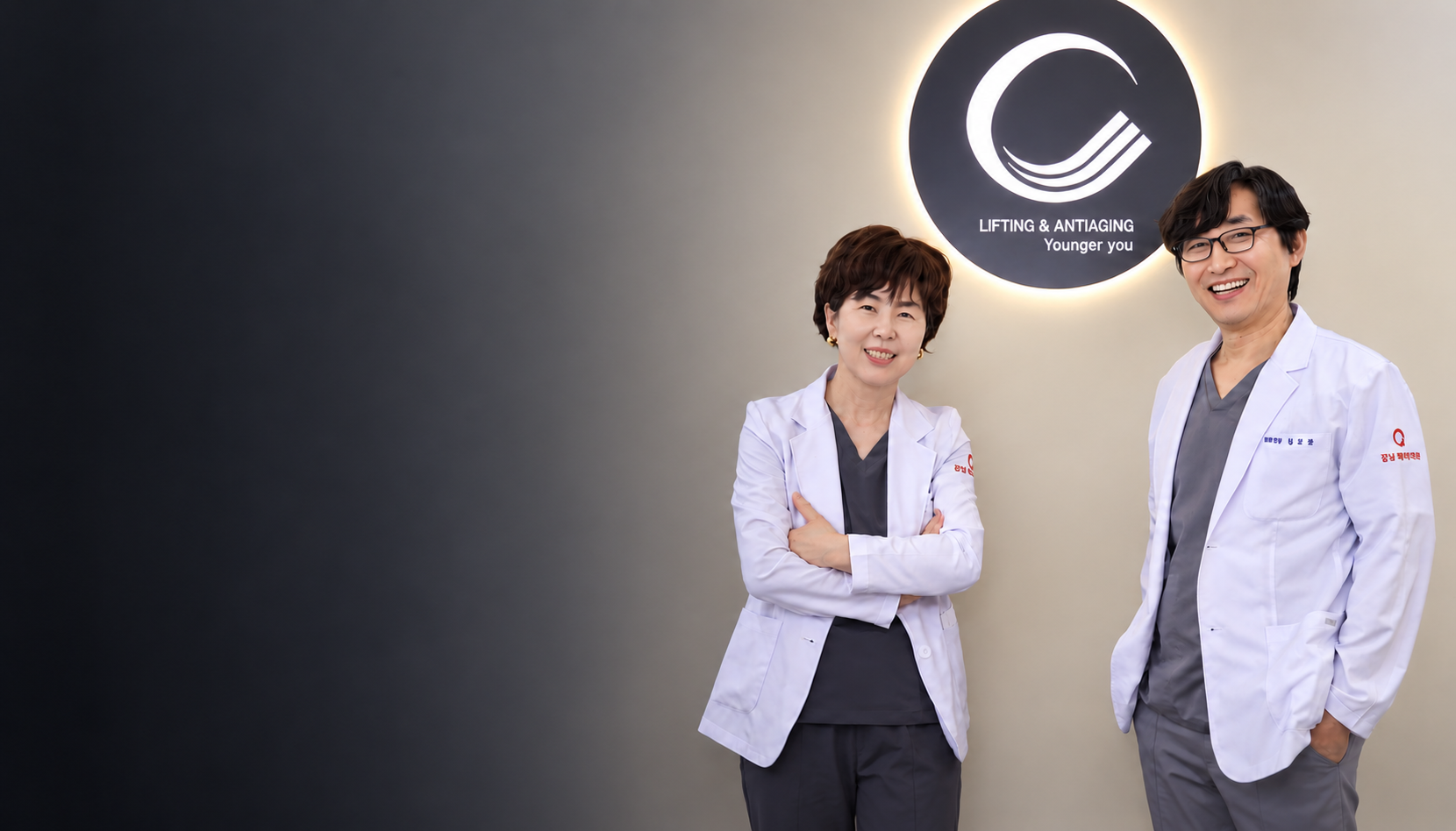
Dr. Ho-chan Kim and Dr. Young-mi Rhee personally consult and treat. Nothing is handed off.
Named an Advanced Regenerative Medicine Institution by the Ministry of Health and Welfare in June 2026.
If you combine a procedure with exosome support in Gangnam, Seoul, leave a few calm days afterwards before flying. Sun, dry cabin air and long walks in the heat can all irritate freshly treated skin. Celliting gives written aftercare in English, Chinese, Japanese or Vietnamese, and the 24-hour contact line means you can ask questions while still in Korea.
Reviewed by Dr. Ho-chan Kim, MD, PhD · Updated October 2026
Often yes, if the doctor considers it suitable for your skin and the type of laser. In some cases it is better to wait a day or two. The decision depends on how the skin reacts after the main procedure.
No. Exosomes are not a treatment for rosacea or any other skin disease. Rosacea needs its own medical management. Once it is controlled, gentle exosome care may sometimes be discussed for skin quality.
It is promising but still early. Lab studies and small human studies suggest exosomes may support repair, but large, long-term trials are limited. A trustworthy clinic will describe exosomes as a supportive option rather than a proven cure.
They may support comfort and recovery for some patients, but no clinic can promise shorter downtime. Recovery depends on the procedure, its intensity and your skin. Follow your aftercare closely either way.
No. Some procedures leave little visible change, and exosome support is optional. The doctor recommends it only where it is likely to be useful for your skin.
Tell us which procedure you are planning in Seoul, and a Celliting doctor will advise whether exosome support makes sense for your skin.
Medical information on this page is provided by Gangnam Celliting Clinic and reviewed by our medical directors. It is not a substitute for an in-person medical consultation. Individual results vary, and all procedures carry potential risks and side effects that your doctor will explain before treatment.
From skin lifting and stem cell treatments to regenerative skin care, our two MD-PhD directors plan every treatment personally. Send us your questions and travel dates.
Everything you need to plan a treatment trip to Seoul




How to find us
WhatsApp :
+82-10-4567-3237
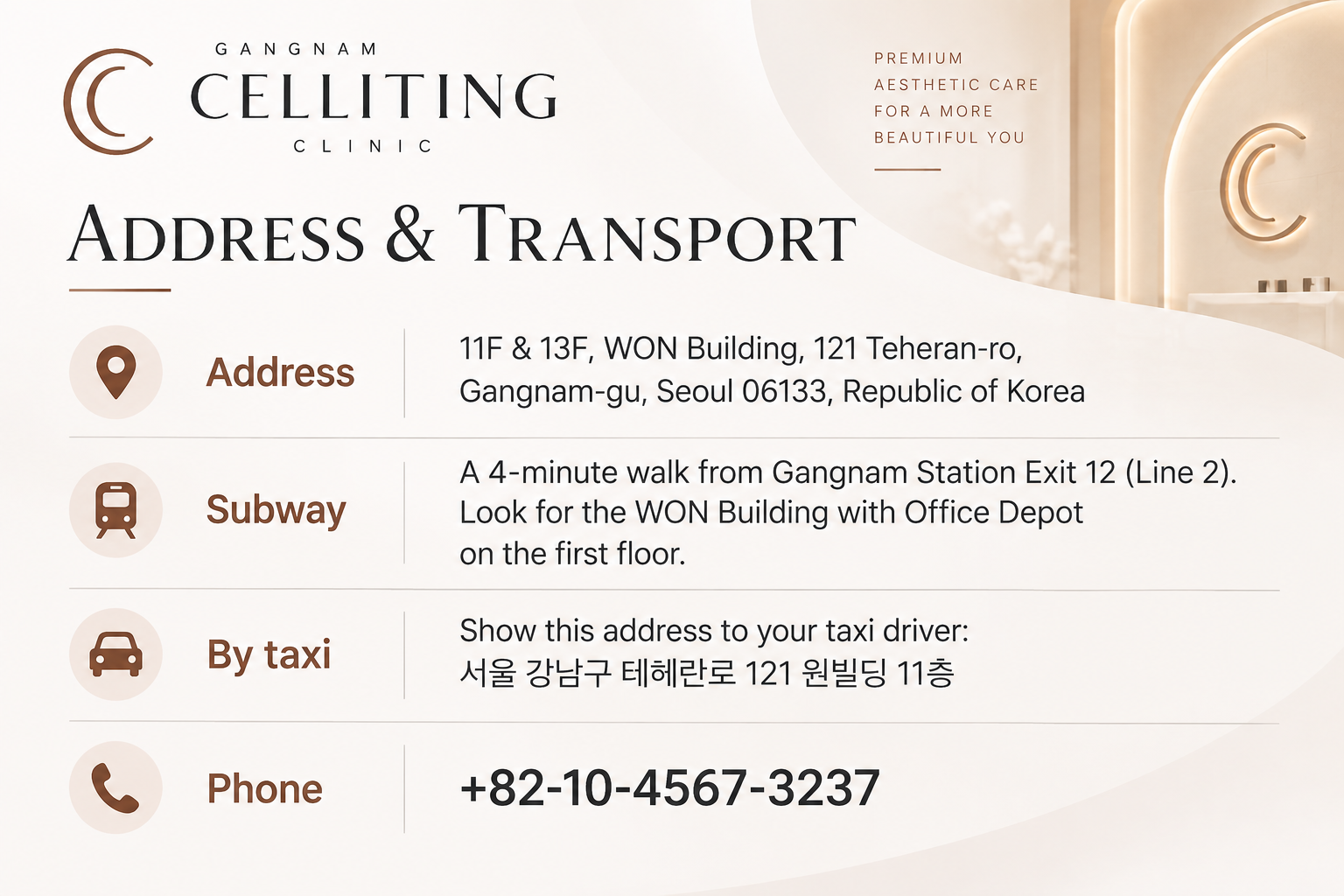
Address : 11F & 13F, WON Building, 121
Teheran-ro, Gangnam-gu, Seoul 06133, Republic of Korea
Gangnam Station, Exit 12