
Send clear photos
Natural light, no makeup, front and both sides, plus your current skincare list.
Dry skin, reactive skin and sun-damaged skin do not need the same regenerative treatment. This guide matches common skin types to the options that may suit them, and explains how aftercare changes for each.
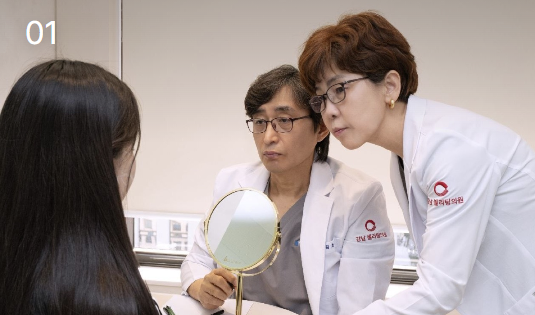
Gangnam Celliting Clinic · 121 Teheran-ro, Gangnam-gu, Seoul · Gangnam Station Exit 12 (4-min walk)
The right regenerative skin treatment depends on your skin type. Dry and thin skin often suit gentle, hydrating regenerative options; sensitive skin may need a cautious start; acne-scarred and sun-damaged skin may benefit from exosome therapy with microneedling or PRP. At Gangnam Celliting Clinic in Gangnam, Seoul, a doctor examines your skin before choosing, and adjusts aftercare to your skin type.
Each skin type has a different main problem, so the regenerative option changes with it. The table is a starting point for your consultation, not a self-prescription. Many people have more than one type, for example dry and sun-damaged, and the doctor weighs both.
| Skin type | Main problem | Options often discussed | Approach |
|---|---|---|---|
| Dry | Weak barrier, flaking, tightness | Exosome therapy, skin booster, PRP | Hydrate and repair the barrier |
| Sensitive | Redness, stinging, flushing | Exosome-based care, cautious start | Calm first, low intensity |
| Acne-prone or scarred | Uneven texture, marks | Exosome with microneedling, PRP | Treat only when breakouts settle |
| Sun-damaged | Dullness, uneven tone, fine lines | Exosome, stem cell face program | Renewal plus strict sun care |
| Thin | Fragile, crepey, visible vessels | Stem cell face, Sculptra, PRP | Build support gently |
A skin booster is an injection of hydrating material placed just under the skin; it is popular in Korea and often paired with regenerative care. For scarring specifically, see exosome microneedling.
By starting small. For skin that reacts easily, the doctor may suggest a gentler first session, lower intensity, or a limited area before treating the whole face. This shows how your skin responds before you commit to more.
Aftercare follows the same basics for everyone, gentle cleansing, no heavy makeup for a short time, and daily sunscreen, but each skin type needs one or two extra rules.
Use a simple, fragrance-free moisturiser and avoid hot water and saunas while the skin is settling.
Pause actives such as retinoids and acids until the doctor says to restart. Keep the routine very short.
Use non-comedogenic products, avoid touching or picking, and change pillowcases often.
Broad-spectrum sunscreen and a hat every day; new UV exposure works against the treatment.
Your written aftercare sheet will spell out the rules for your own skin. For wider skin-quality goals, the aging skin care plans page may help.
Suitability is a medical decision made by your doctor after an in-person consultation and review of your health history.
Natural light, no makeup, front and both sides, plus your current skincare list.
A medical director confirms your skin type and any reasons to wait.
Treatment and strength are matched to your skin, with a cautious start if needed.
Topical numbing or another option suited to the procedure.
Written guidance for your skin type and a contact line for questions.
Written aftercare in your language, a 24-hour line and a free 3-month follow-up.
No serious complication since 2007. FDA/KFDA-cleared devices and verifiable, genuine consumables.
Monitored sleep sedation, AirNox analgesia, the X-injector or local anesthesia, matched to the procedure.
Plane cabins are very dry, and sightseeing means sun. Keep a plain moisturiser and sunscreen in your hand luggage, and try to have treatment several days before your flight so early redness can settle. Seoul summers are humid and winters are dry, which affects aftercare. You can send photos after you return home under the free 3-month follow-up, in English, Chinese, Japanese or Vietnamese.
Reviewed by Dr. Ho-chan Kim, MD, PhD · Updated October 2026
Often yes, with care. The doctor may start with a milder option or lower intensity and check how your skin reacts. If your skin is currently flaring, for example with rosacea or eczema, treatment is usually postponed until it calms.
It may help the texture of mild to moderate scars, especially exosome therapy combined with microneedling or PRP. Deep scars usually need several sessions and sometimes other methods. Active breakouts should be controlled first.
There is no single best one, but options that build support gradually, such as the autologous stem cell face program, Sculptra or PRP, are often discussed. The doctor checks skin thickness and volume before suggesting one.
You may need to pause strong actives such as retinoids, acids and exfoliants for a few days before and after. The exact timing depends on the treatment, so bring your product list to the consultation.
It varies with skin type and method. After microneedling or injections, redness and mild swelling commonly settle within a few days, and small bruises can take longer. Sensitive skin may stay pink a little longer.
Share bare-skin photos on WhatsApp (+82-10-4567-3237) or through the consultation form, and a doctor will suggest which regenerative option to discuss first.
Medical information on this page is provided by Gangnam Celliting Clinic and reviewed by our medical directors. It is not a substitute for an in-person medical consultation. Individual results vary, and all procedures carry potential risks and side effects that your doctor will explain before treatment.
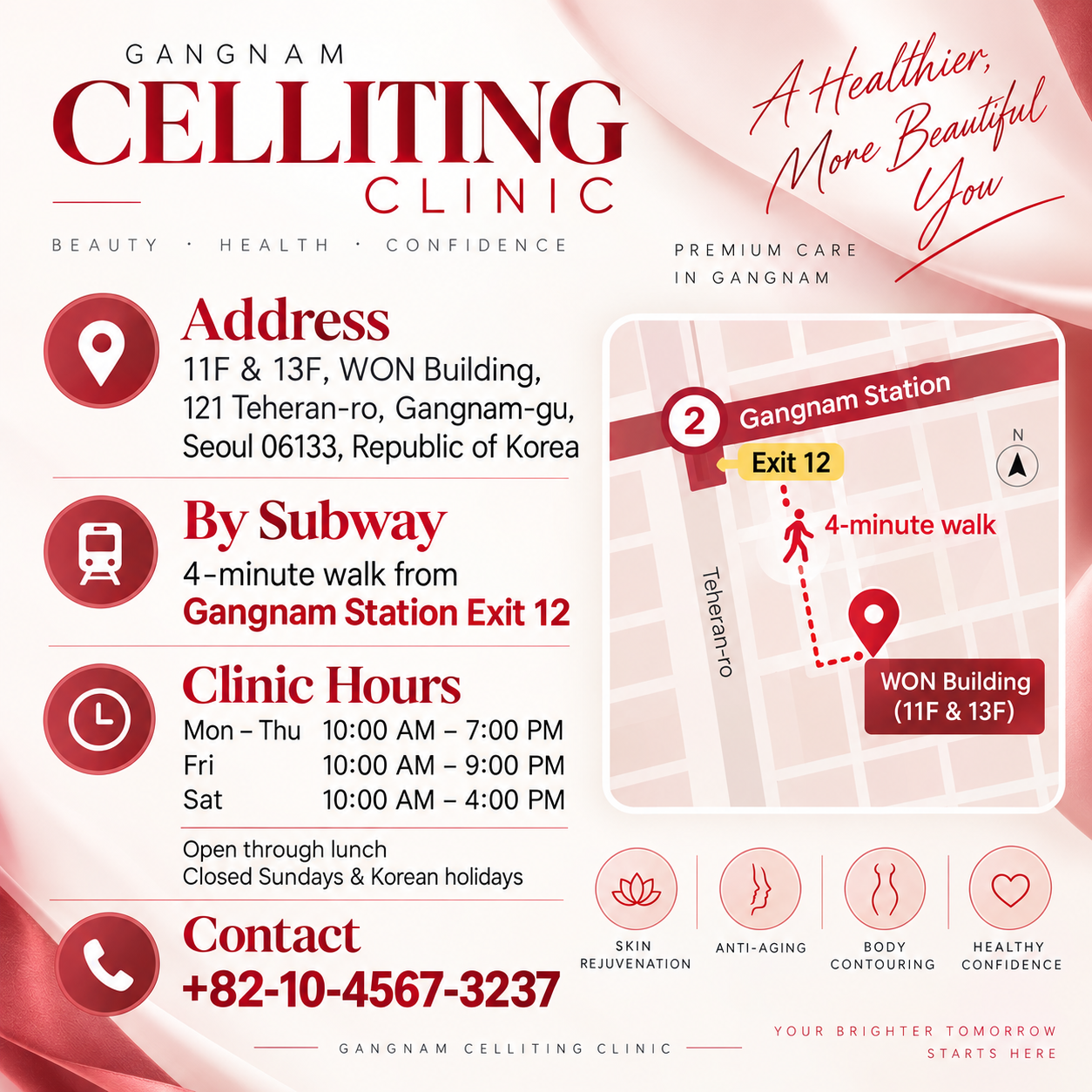
From skin lifting and stem cell treatments to regenerative skin care, our two MD-PhD directors plan every treatment personally. Send us your questions and travel dates.
Everything you need to plan a treatment trip to Seoul




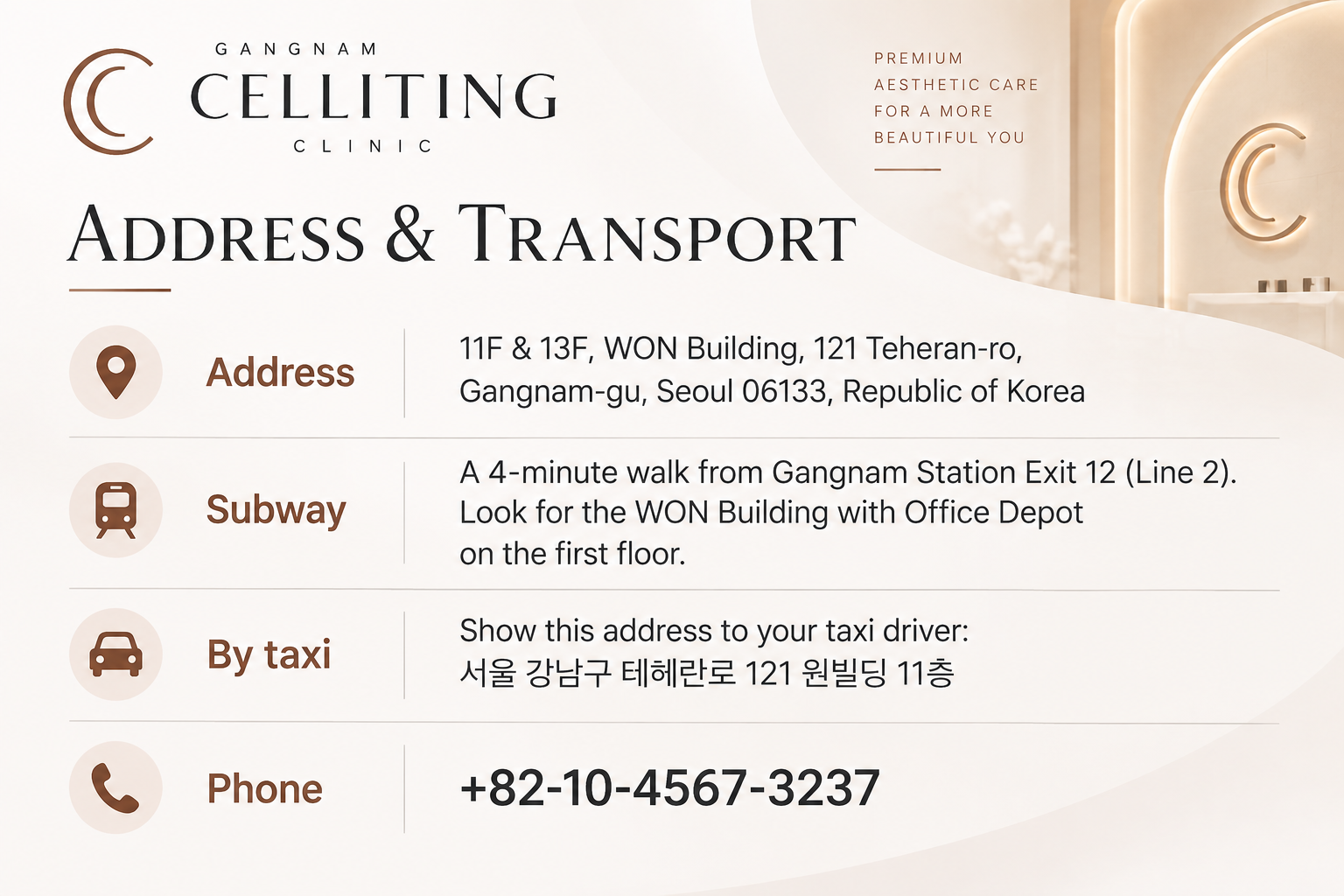
How to find us
WhatsApp :
+82-10-4567-3237
Address : 11F & 13F, WON Building, 121
Teheran-ro, Gangnam-gu, Seoul 06133, Republic of Korea
Gangnam Station, Exit 12