
Describe your symptoms
Tell us how much you have been drinking, any vomiting or diarrhoea, and when your last flight landed.
Most of the time, a glass of water and a salty snack fix mild dehydration. This page explains the situations where an IV of fluids and electrolytes may help more, and the safety checks a doctor makes first.
Gangnam Celliting Clinic · 121 Teheran-ro, Gangnam-gu, Seoul · Gangnam Station Exit 12 (4-min walk)
Hydration IV therapy replaces water and, depending on the formulation, electrolytes such as sodium and potassium through a drip into a vein. It can help when you are too dehydrated, nauseous or tired to drink enough, for example after a long flight, a hot day or a stomach bug. At Gangnam Celliting Clinic in Gangnam, Seoul, a doctor first checks that IV fluids are safe for you.
Your body needs both water and dissolved salts, called electrolytes, to keep blood pressure, muscles and nerves working normally. Sweat, vomiting, diarrhoea and dry cabin air all remove water, and some of these also remove salts.
Typical signs of mild dehydration are thirst, dark urine, headache, dizziness on standing and unusual tiredness.
IV hydration is most useful when drinking is not working well — because you cannot keep fluids down, have lost a lot quickly, or need to feel steady again within hours rather than a day.
| Situation | Drinking usually enough | An IV may help |
|---|---|---|
| Mild thirst after sightseeing | Yes | Rarely needed |
| Long-haul flight, little sleep | Often | If dizzy, headachy or not drinking |
| Hot, humid summer day in Seoul | Usually, with salts | After heavy sweating with symptoms |
| After a stomach bug | If you can keep fluids down | If vomiting makes drinking hard |
| Before an aesthetic procedure | Yes | Only if the doctor advises it |
Safety starts with deciding whether you should have IV fluids at all. Extra fluid can strain the heart or kidneys in some people, so the doctor asks about your health before choosing the volume and contents.
The most common side effects are a small bruise, mild tenderness or a cool feeling in the arm during the infusion.
Yes, the fluid base often doubles as the carrier for vitamins. If you also feel run-down, the doctor may suggest a vitamin IV cocktail instead of plain fluids. Arriving well hydrated can also make you more comfortable for treatments such as non-surgical face lifting, although a drip is never required beforehand.
Suitability is a medical decision made by your doctor after an in-person consultation and review of your health history.
Tell us how much you have been drinking, any vomiting or diarrhoea, and when your last flight landed.
The doctor reviews your history and how you feel, and decides whether IV fluids are appropriate.
The bag and any electrolytes or add-ons are selected for your situation and explained to you.
You relax in a treatment chair for roughly 20–40 minutes while staff monitor the drip.
Afterwards, carry on sipping water or an oral rehydration drink and eat a light, salty meal.
Written aftercare in your language, a 24-hour line and a free 3-month follow-up.
No serious complication since 2007. FDA/KFDA-cleared devices and verifiable, genuine consumables.
Monitored sleep sedation, AirNox analgesia, the X-injector or local anesthesia, matched to the procedure.
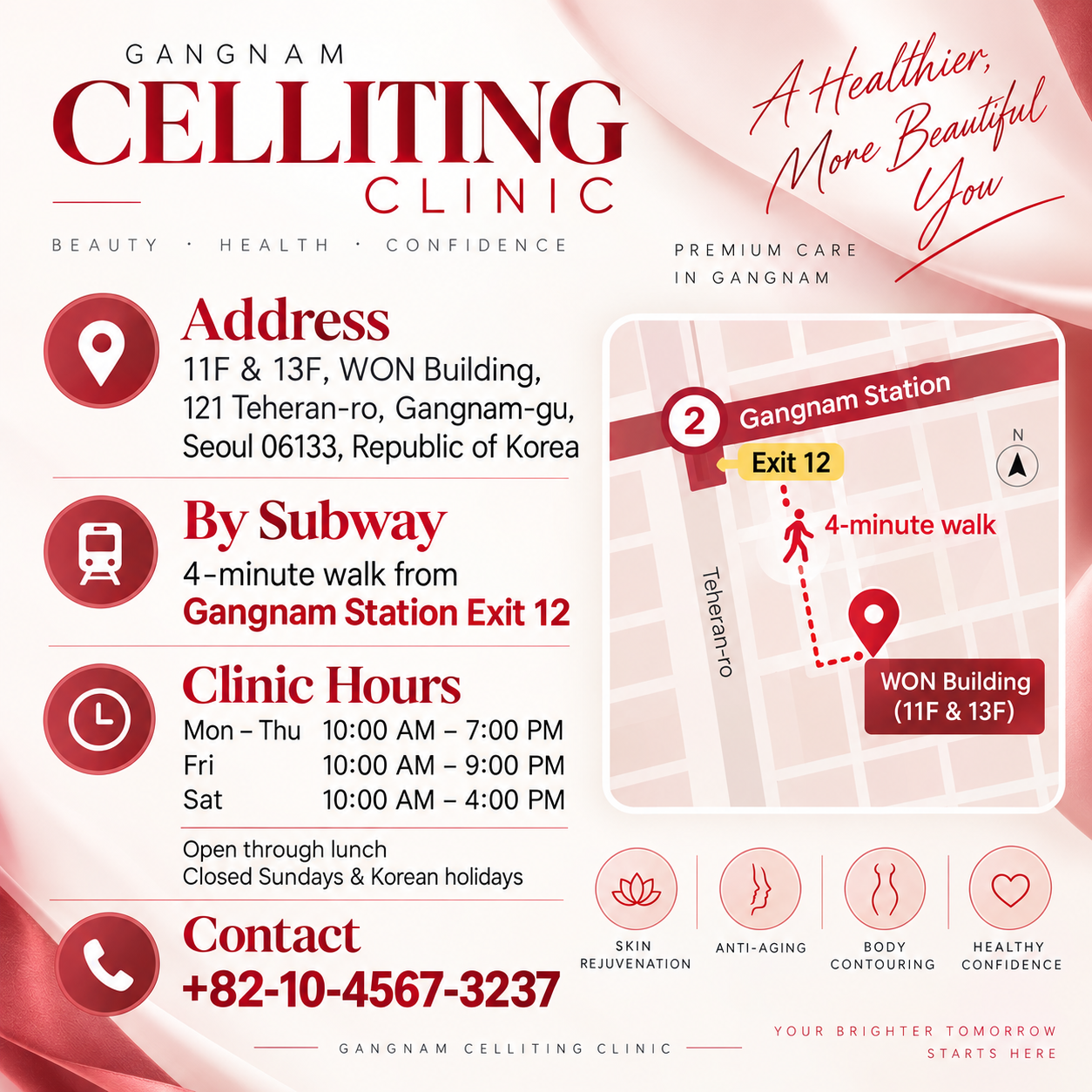
Seoul summers are hot and humid, winters are dry, and long walking days add up. Carry a water bottle, buy oral rehydration salts at any pharmacy, and use the drip as a back-up rather than a habit. If you plan treatments, book a hydration IV for an afternoon with no other appointments. The clinic is about 4 minutes on foot from Gangnam Station Exit 12 and is open until 21:00 on Fridays.
Reviewed by Dr. Ho-chan Kim, MD, PhD · Updated October 2026
Usually a sterile salt-water solution, sometimes with added electrolytes or glucose, chosen to match how you lost fluid. Some formulations also carry vitamins. The doctor will tell you exactly what your bag contains before the drip starts, and you can ask about each component.
If you were genuinely dehydrated, many people feel steadier during or soon after the drip as blood volume recovers. If you were already well hydrated, you may notice little change. Rest, food and continued drinking still matter for the rest of the day.
No drip cures a hangover. Fluids may ease the thirst and headache that come from dehydration, but they do not speed alcohol breakdown or remove other causes of feeling unwell. Repeated heavy drinking is better addressed than masked.
For healthy adults it is generally low risk when done by medical staff. Possible problems include bruising, vein irritation and, rarely, infection or fluid overload in people with heart or kidney conditions. That is why the doctor screens you and staff watch the infusion.
You may need to urinate more over the next few hours, especially if you were not very dehydrated. Plan a toilet stop before getting on the subway or starting a long activity.
Send your symptoms and schedule via WhatsApp or the consultation form. A doctor will advise whether a drip or simply rest and fluids is the better choice.
Medical information on this page is provided by Gangnam Celliting Clinic and reviewed by our medical directors. It is not a substitute for an in-person medical consultation. Individual results vary, and all procedures carry potential risks and side effects that your doctor will explain before treatment.
From skin lifting and stem cell treatments to regenerative skin care, our two MD-PhD directors plan every treatment personally. Send us your questions and travel dates.
Everything you need to plan a treatment trip to Seoul




How to find us


WhatsApp :
+82-10-4567-3237
Address : 11F & 13F, WON Building, 121
Teheran-ro, Gangnam-gu, Seoul 06133, Republic of Korea
Gangnam Station, Exit 12