Message before you travel
Share photos and your main worries via WhatsApp or the consultation form.
Skin that bounces back more slowly, creases that stay after sleep, a face that looks thinner in photos: these are often signs of collagen loss. Learn why it happens, how it is assessed and what helps at each stage.
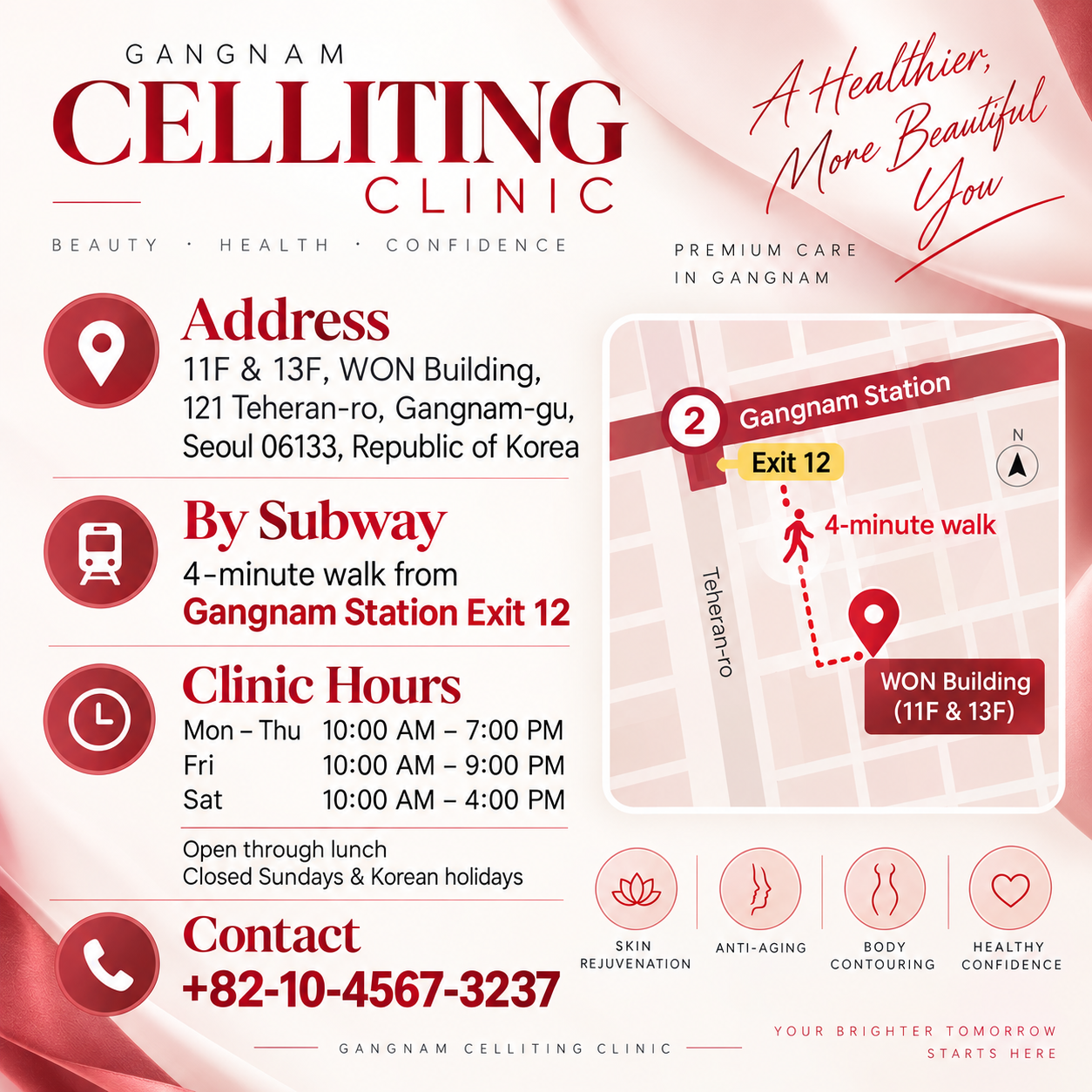
Gangnam Celliting Clinic · 121 Teheran-ro, Gangnam-gu, Seoul · Gangnam Station Exit 12 (4-min walk)
The best treatment for collagen loss depends on how far it has progressed. Mild loss often responds to skin boosters, exosome or regenerative care; moderate loss usually needs heat-based tightening such as radiofrequency; advanced loss with sagging may need deeper ultrasound lifting, a collagen stimulator like Sculptra, or a combination. Sun protection and not smoking help protect the collagen you still have.
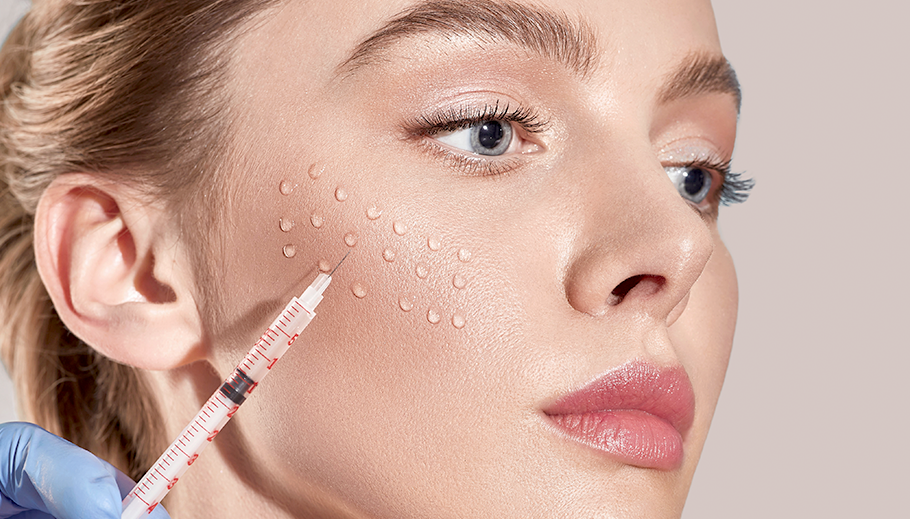
The earliest signs of collagen loss are usually changes in how skin behaves rather than deep wrinkles. Collagen is the protein framework of the dermis, and when it thins, skin becomes less springy and less dense.
If thin, fragile skin is your main concern, see our page on treatments for thin aging skin.

Collagen loss speeds up when natural aging is combined with factors that damage existing collagen or slow its production. Some you cannot change; others you can.
| Factor | What it does | Can you control it? |
|---|---|---|
| Age | Collagen production slows gradually from early adulthood | No |
| UV exposure | Breaks down collagen and causes photoaging | Largely, with sun protection |
| Smoking | Reduces blood flow and speeds collagen breakdown | Yes |
| Menopause | Falling estrogen is linked to faster collagen decline | Partly, with medical advice |
| Poor sleep, high sugar | May add stress to skin repair | Partly |
Doctors assess collagen loss by looking at skin thickness, recoil and contour together, because no single sign tells the whole story.
At Gangnam Celliting Clinic, this assessment is done personally by Dr. Ho-chan Kim or Dr. Young-mi Rhee, both MD-PhDs, who together bring over 20 years of clinical experience.

Treatment works best when its strength matches the stage of collagen loss; using a strong device on mild loss adds little, and a light booster on advanced loss disappoints.
| Stage | What you see | Options to discuss |
|---|---|---|
| Mild | Dull, less springy, fine lines | Skin boosters, exosome care |
| Moderate | Thinner skin, early softening | RF such as Thermage FLX or XERF, plus boosters |
| Advanced | Sagging, hollows, crepey texture | HIFU, Sculptra, stem cell care, combined lifting |
Regenerative options such as exosome skin regeneration and the autologous stem cell Face program can support skin quality at any stage. For deeper laxity, Ultherapy targets the support layer beneath the skin.
Protecting existing collagen is mostly about daily habits, and it helps any treatment last longer.
Suitability is a medical decision made by your doctor after an in-person consultation and review of your health history.
Share photos and your main worries via WhatsApp or the consultation form.
The doctor grades your collagen loss and explains the options that fit your stage.
Pain control is matched to the procedure, from topical anesthesia to AirNox nitrous-oxygen analgesia.
Written instructions, a 24-hour contact line and a free 3-month follow-up after you return home.
Dr. Ho-chan Kim and Dr. Young-mi Rhee personally consult and treat. Nothing is handed off.
Monitored sleep sedation, AirNox analgesia, the X-injector or local anesthesia, matched to the procedure.
A Gangnam-gu Official Partner Clinic with English, Chinese, Japanese and Vietnamese support.
Many collagen treatments involve little downtime, so a stay of four to seven days in Gangnam, Seoul is often enough for consultation, treatment and a check before flying. Because new collagen forms gradually, the final result usually appears after you are home; the 3-month follow-up covers that period. Consultations are available in English, Chinese, Japanese and Vietnamese, and the clinic sits near Gangnam Station Exit 12.
Reviewed by Dr. Ho-chan Kim, MD, PhD · Updated October 2026
It starts earlier than most people think. Collagen production generally slows from early adulthood, but visible signs often appear in the late 30s or 40s and can speed up around menopause. Sun exposure and smoking can bring them forward by years.
Not fully. Treatments can encourage new collagen and improve firmness and texture, but they cannot reset skin to an earlier age. Realistic goals are firmer, healthier-looking skin and slower progression, with results that vary from person to person.
They do not replace medical treatment. Oral supplements and topical products may support skin health for some people, but evidence for visible collagen rebuilding is limited compared with procedures that directly stimulate the dermis. Daily sunscreen remains the most proven home step.
It can. Falling estrogen around menopause is linked to faster collagen decline, which may show as drier, thinner skin. Dr. Young-mi Rhee is board-certified in obstetrics and gynecology, so hormonal context can be considered as part of your skin assessment.
A doctor's examination is the most reliable way. As a rough guide, mild loss affects texture and bounce, moderate loss adds thinning and early softening, and advanced loss includes visible sagging or hollows. The grade decides which treatments make sense.
Send your photos through WhatsApp or the consultation form, and plan a treatment that fits your stage of collagen loss.
Medical information on this page is provided by Gangnam Celliting Clinic and reviewed by our medical directors. It is not a substitute for an in-person medical consultation. Individual results vary, and all procedures carry potential risks and side effects that your doctor will explain before treatment.
From skin lifting and stem cell treatments to regenerative skin care, our two MD-PhD directors plan every treatment personally. Send us your questions and travel dates.
Everything you need to plan a treatment trip to Seoul




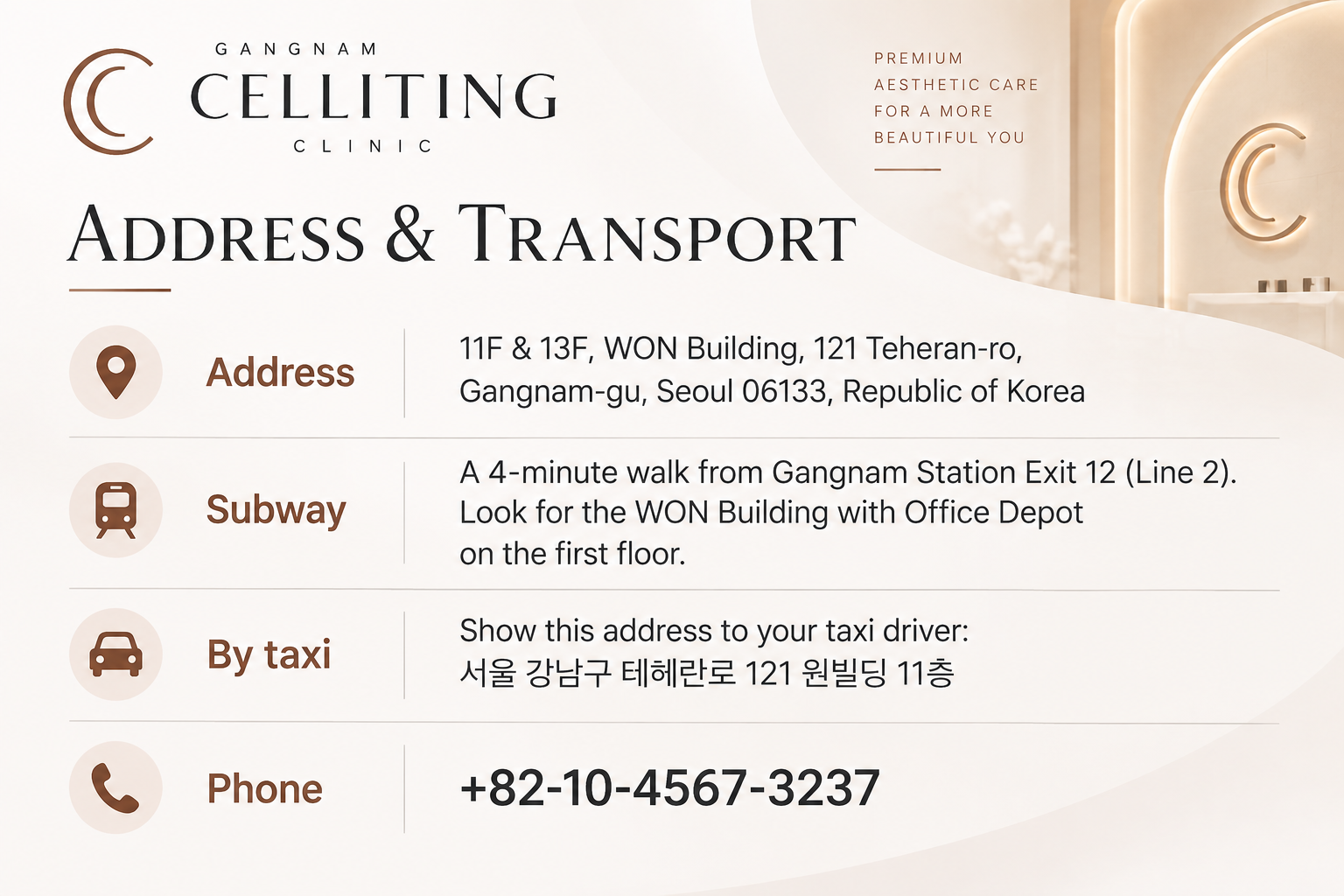
How to find us
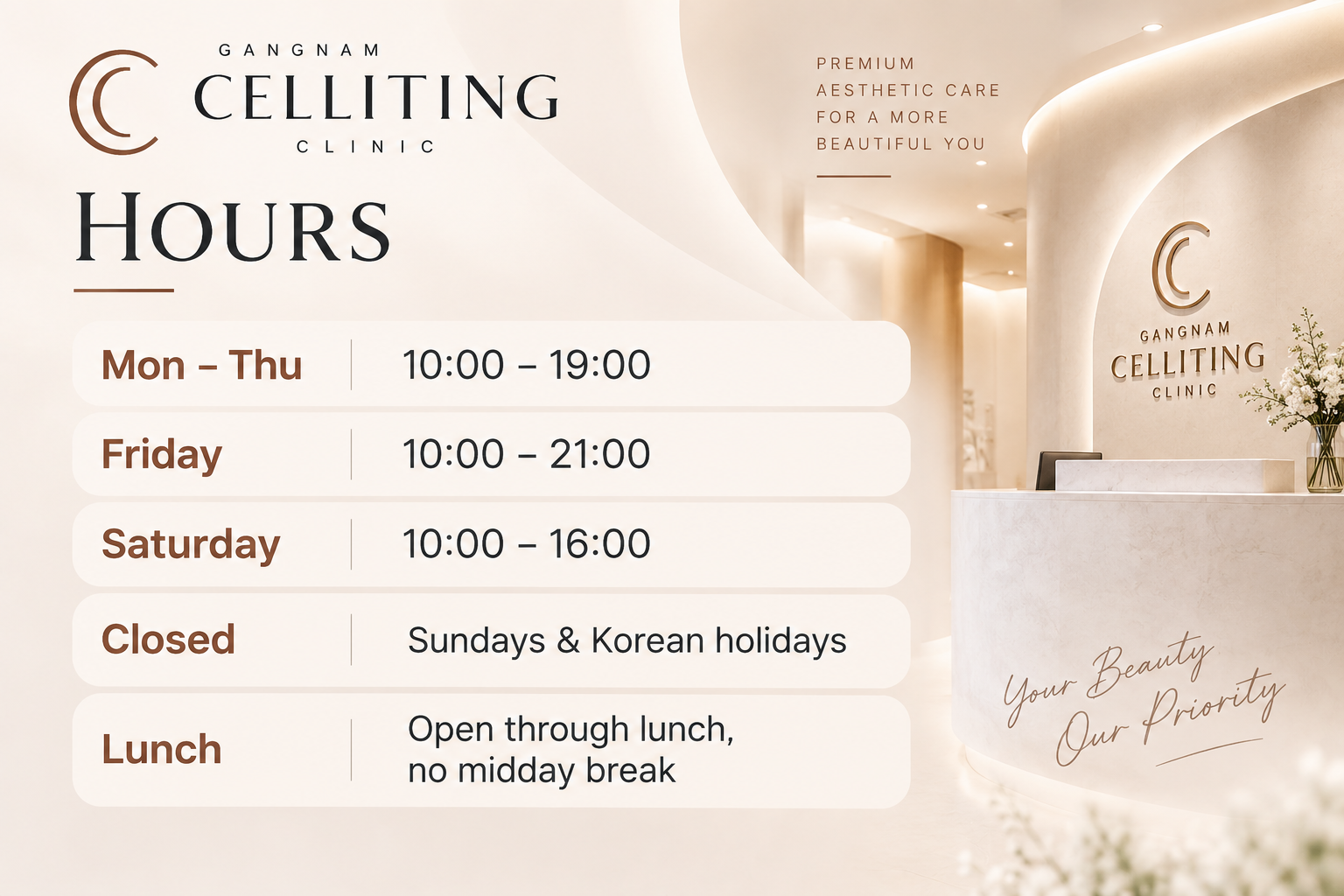
WhatsApp :
+82-10-4567-3237
Address : 11F & 13F, WON Building, 121
Teheran-ro, Gangnam-gu, Seoul 06133, Republic of Korea
Gangnam Station, Exit 12